
Battery Labels
Labels and signage for battery energy storage — isolator plates, supply identification, and the hazard signage that belongs on a battery enclosure or the room containing one.
What engraved Traffolyte is, and when it isn't →
Featured Battery Labels


Why battery labelling is its own problem
A battery is the one part of an electrical installation that cannot be switched off. Isolate the grid, isolate the solar, and the battery is still a live source with substantial available fault current. Labelling is what tells the next person that, at the moment they most need to know it.
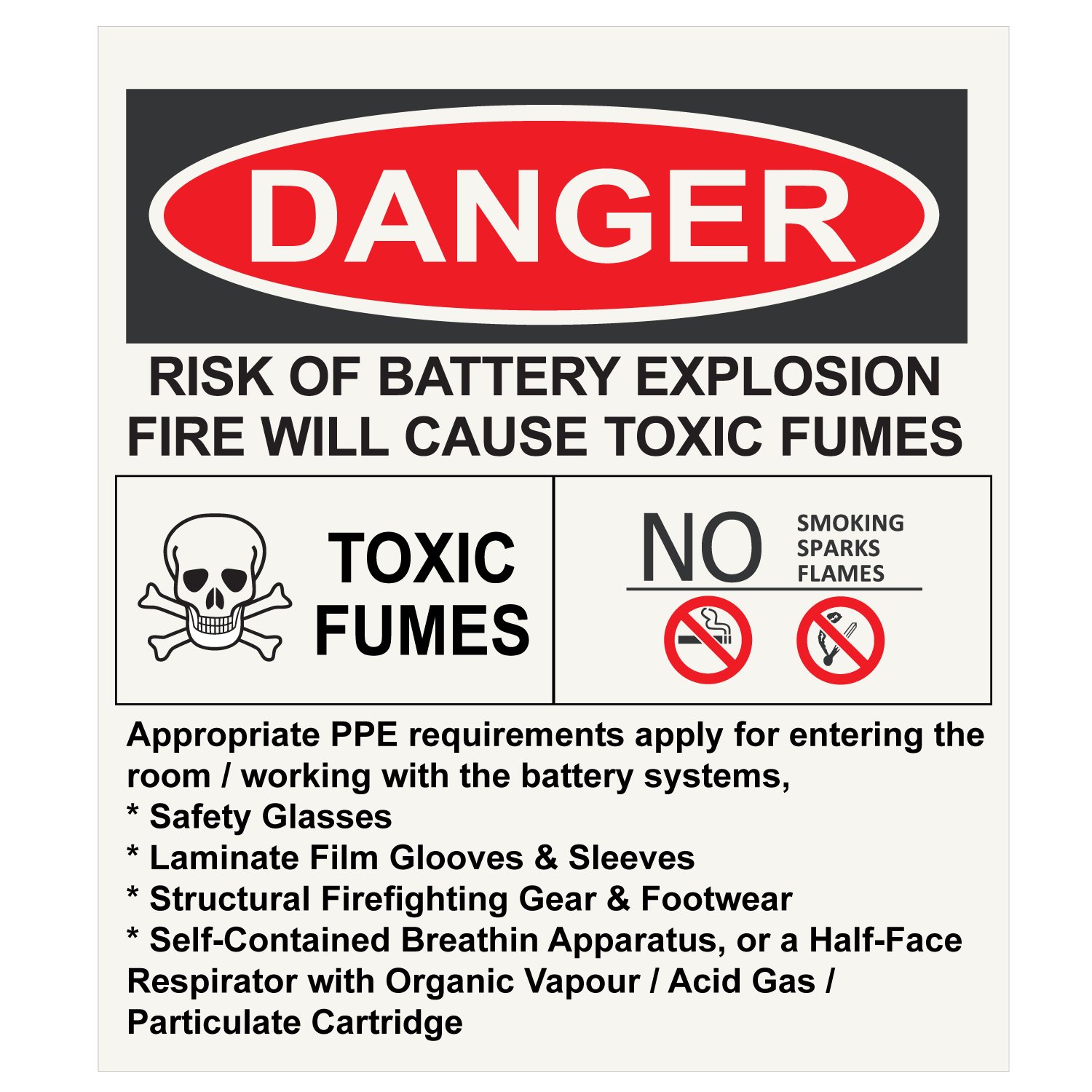
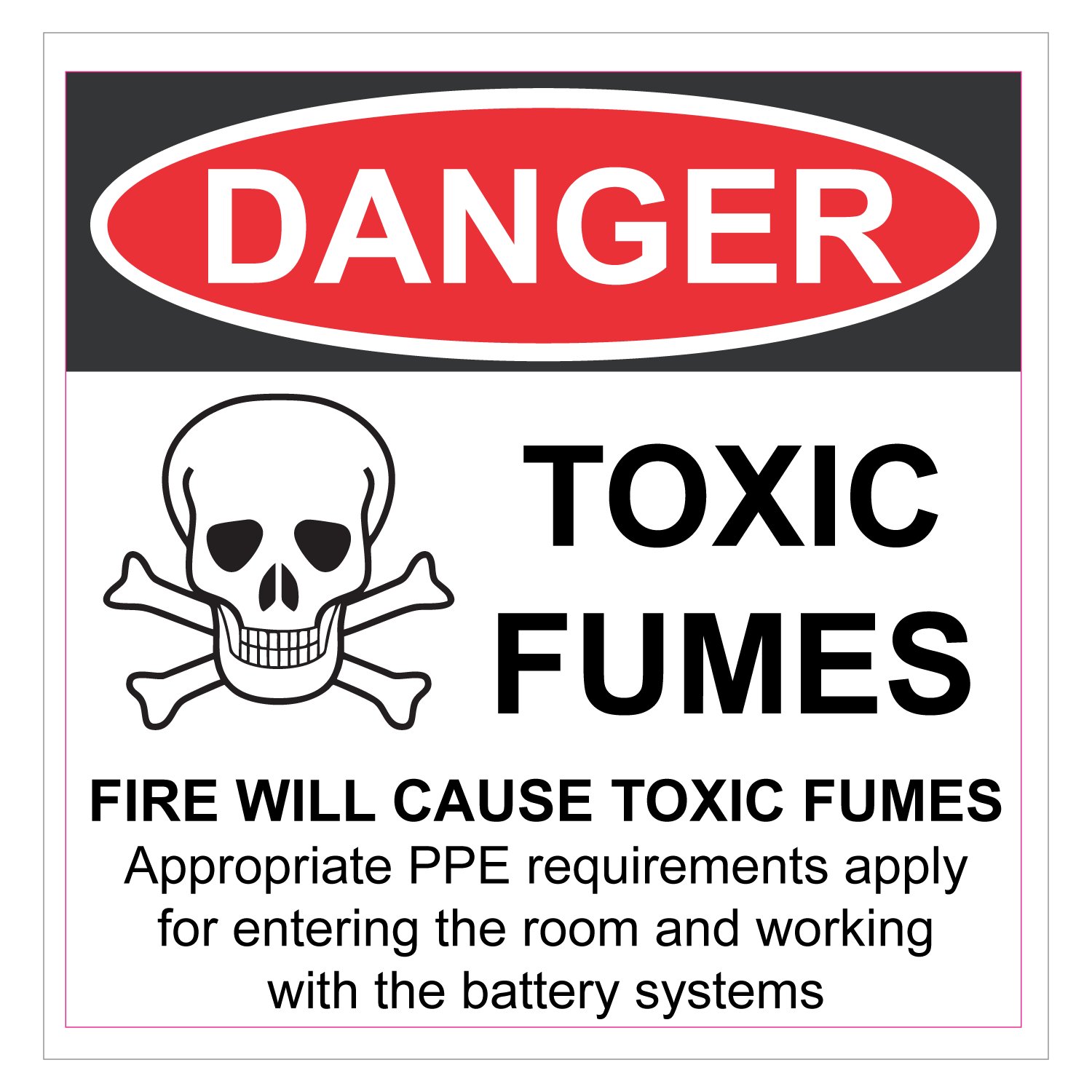
There is a second hazard class that does not appear anywhere else in this catalogue: what the cells themselves can emit. Depending on chemistry that can mean flammable or toxic gas under fault or thermal-runaway conditions. The practical consequence when ordering is that a battery job usually needs more than isolator plates — ventilation and PPE signage as well — so it is worth listing what the site actually has before you order, rather than ordering isolator labels and coming back for the rest.
Which standards apply
Battery systems for electrical installations are covered by AS/NZS 5139, alongside AS/NZS 3000 for the installation generally.
We make the labels; we don't certify installations. If you need to be certain a particular plate satisfies a particular clause, check it against the standard or with your inspector before ordering.
What goes where
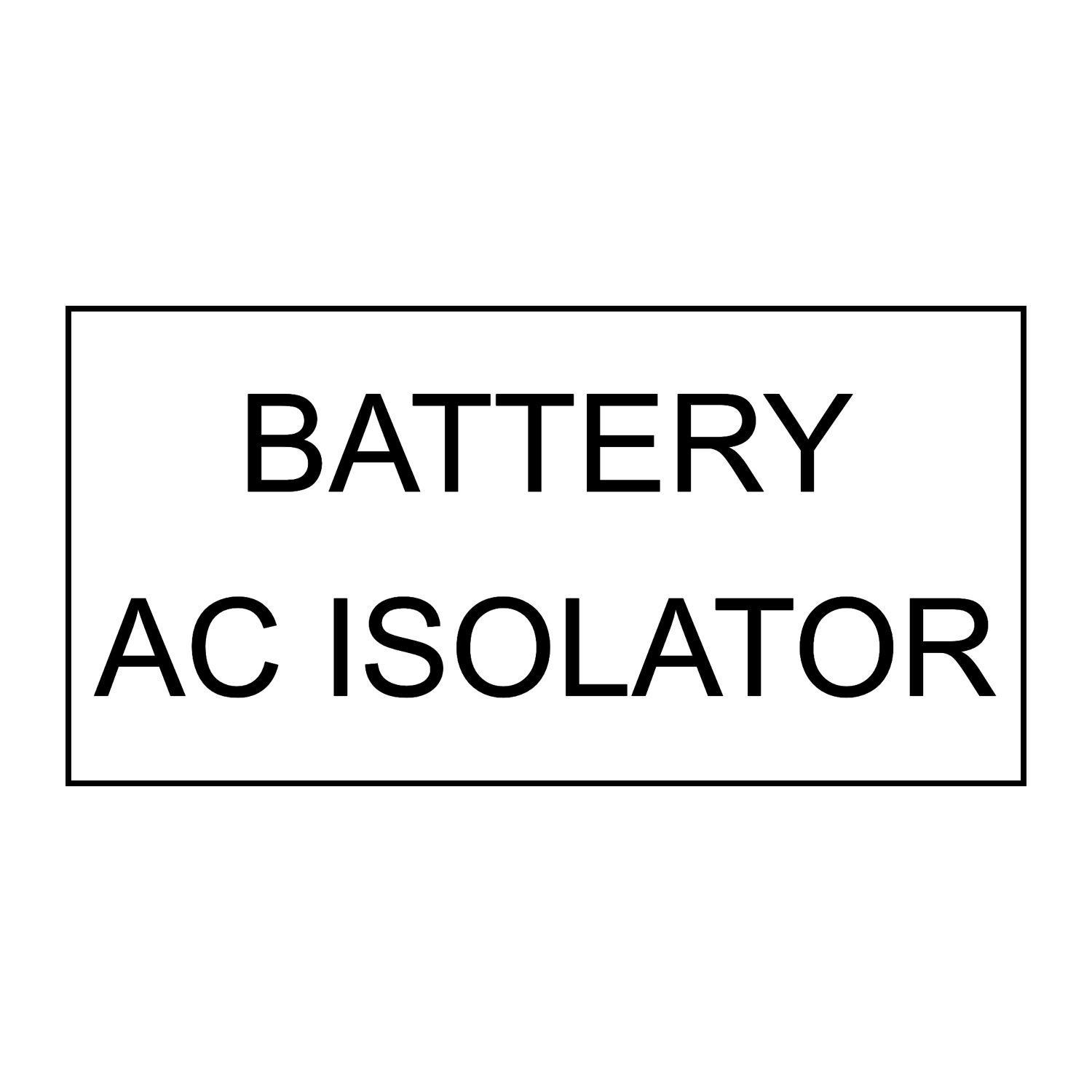
Isolator plates go on the switch, sized to the enclosure. On a site with both solar and storage the distinction between the inverter's AC isolator and the battery's own isolator is the one most worth labelling clearly, because they look identical and do entirely different things.
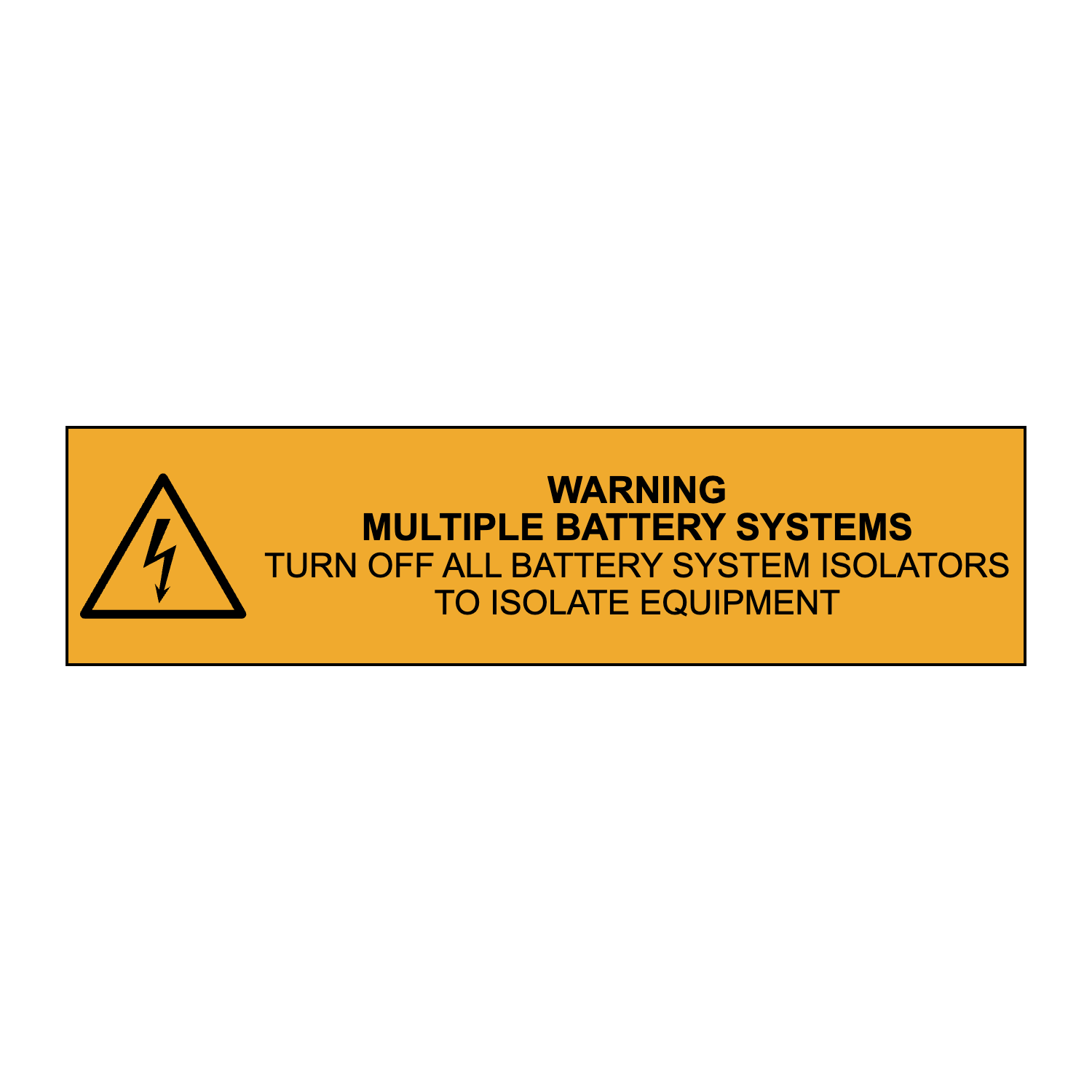
Hazard and PPE signage goes on the enclosure door or at the entry to the room, positioned to be read before someone opens anything. These are supplied larger than switchboard plates for that reason.
If a plate has to carry a symbol rather than text alone, say so when you order. A hazard triangle is produced differently from text and cannot be added afterwards — the plate has to be remade, which costs you the lead time twice.
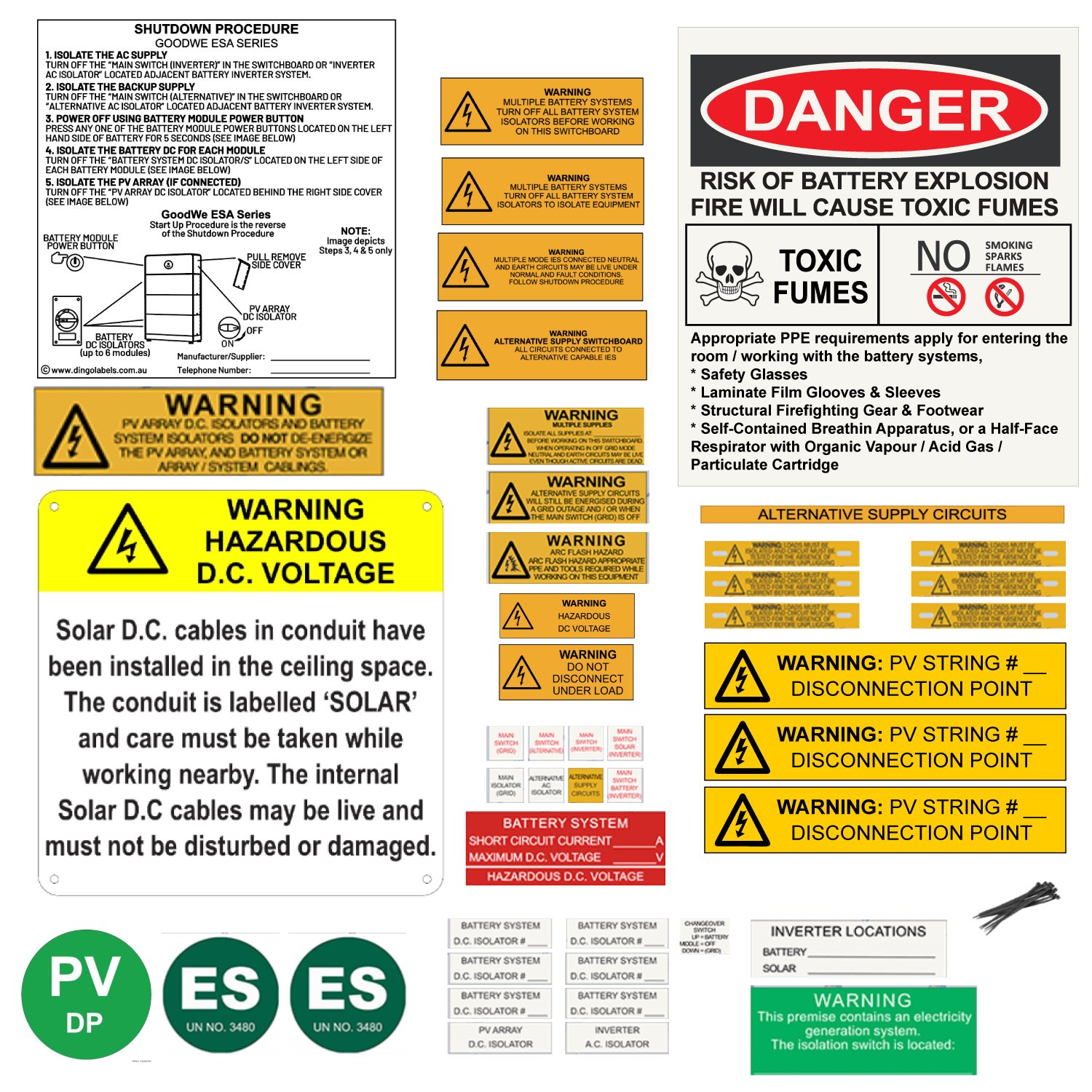
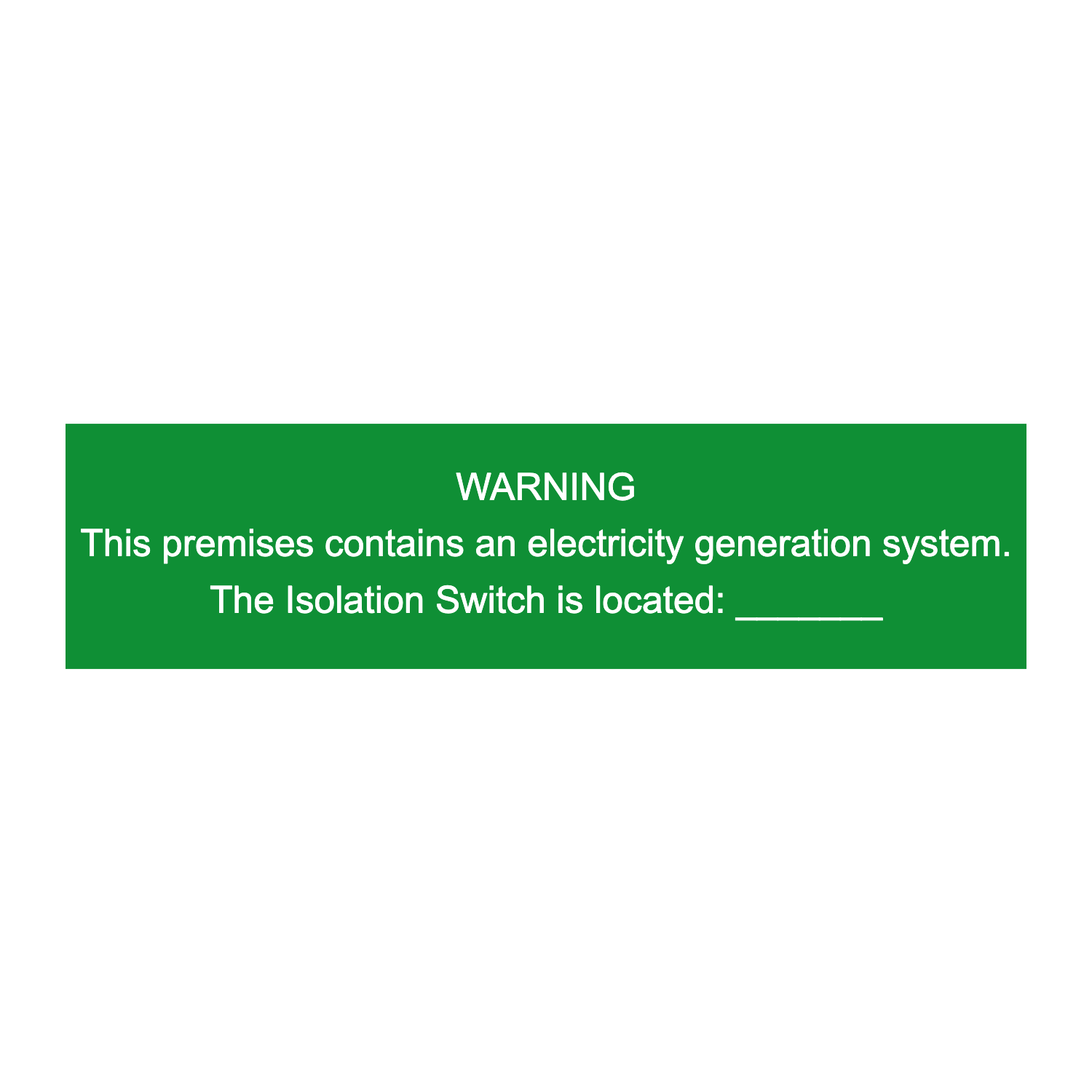
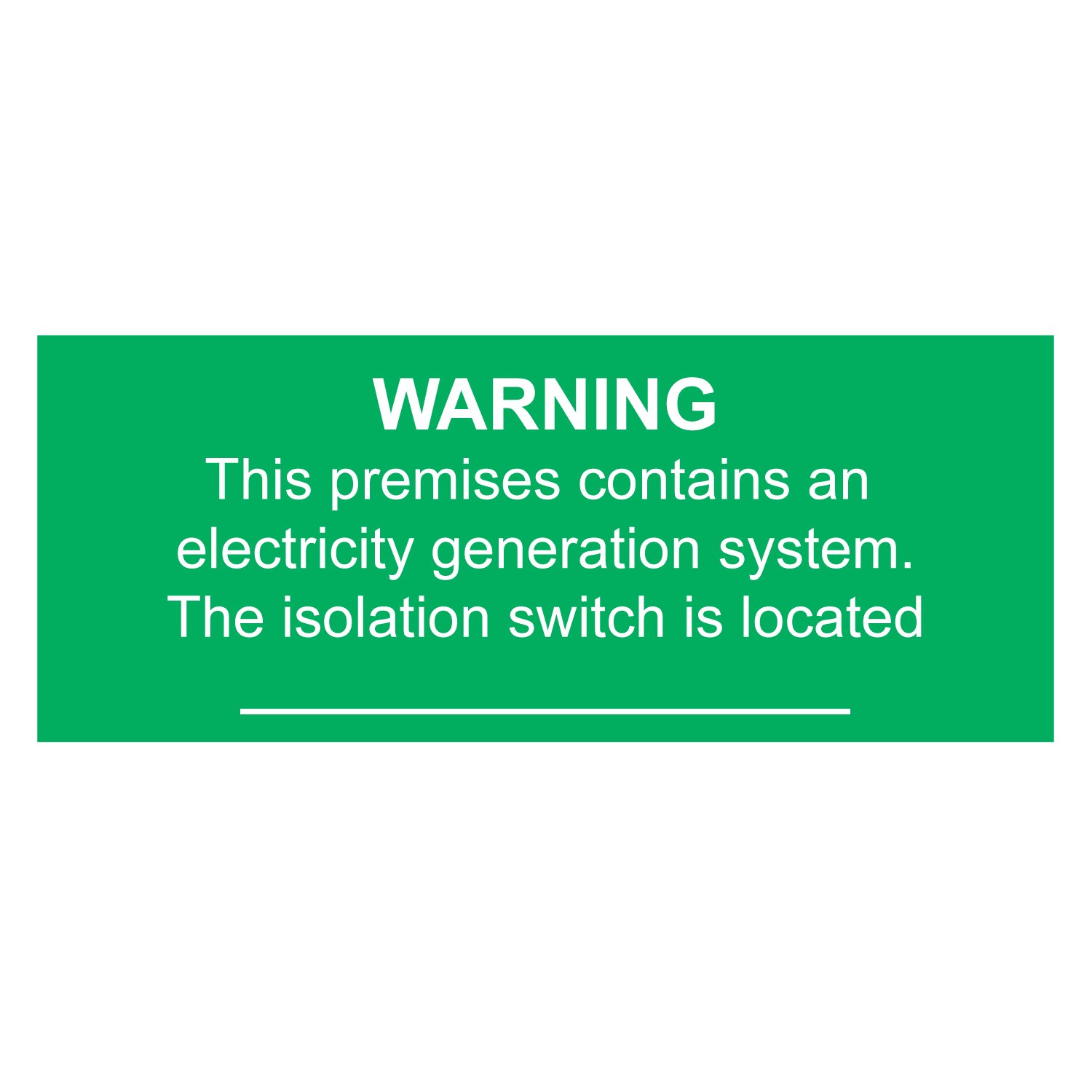
Supply identification plates go on the main switchboard, where the presence of a second on-site source has to be visible to anyone working on the board — the same job the solar warning plates do, for the same reason.
Material and environment
Engraved Traffolyte for anything mounted on switchgear, for the same durability reason as the rest of the range: engraved text cannot wear off.
Larger hazard signage is produced on adhesive vinyl, which suits the flat sheet-metal face of a battery enclosure and can be sized well beyond what is practical in a rigid engraved plate.
For a battery installed outdoors or in an unconditioned space, ask about a laminated vinyl or reflective finish — a garage wall and a west-facing external enclosure are different environments, and a sign that has faded past legibility is not doing its job.